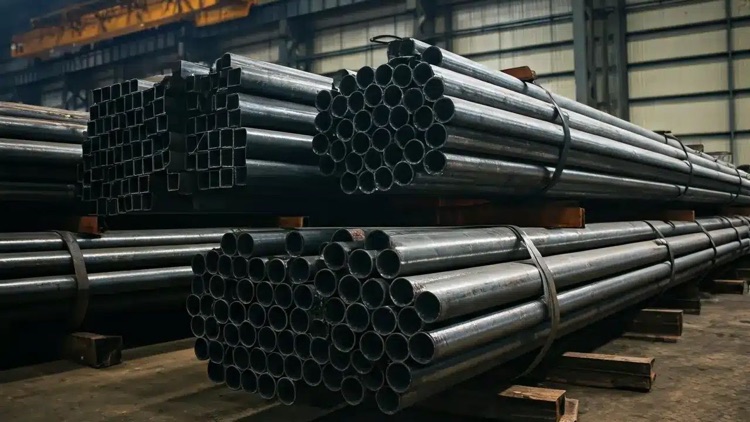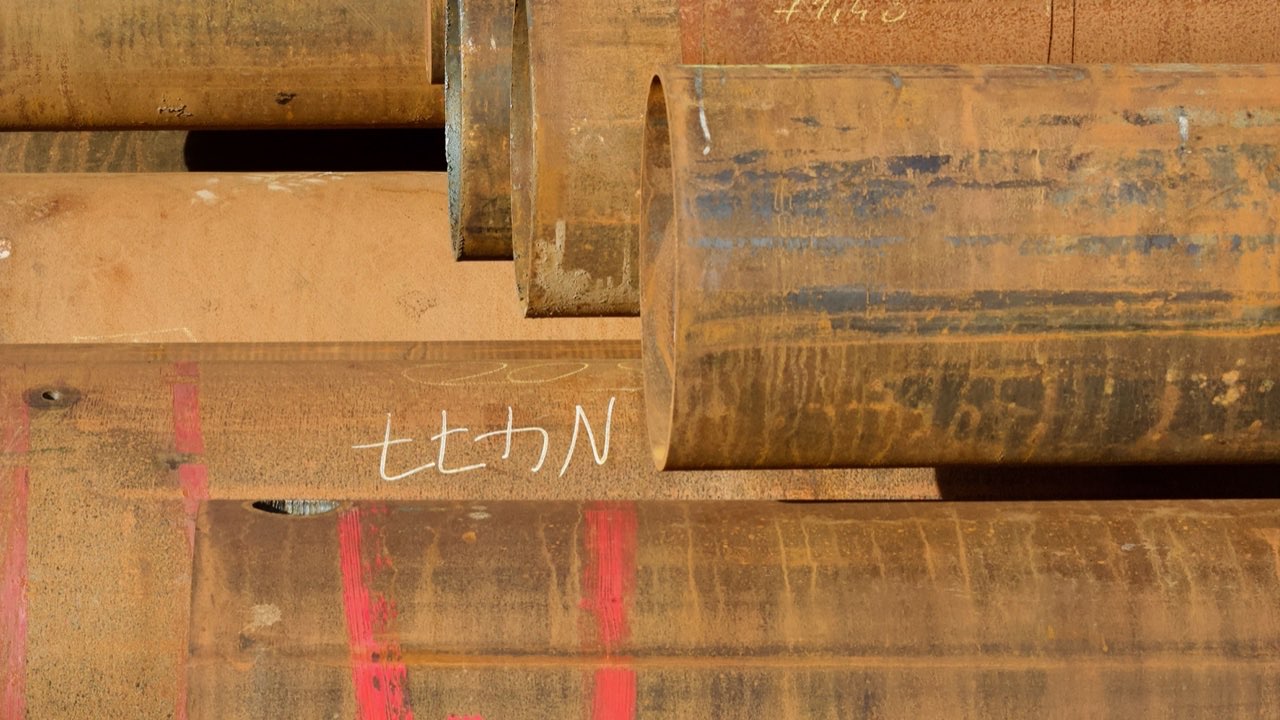
It’s a common experience in pipe procurement: you send out the same inquiry to three suppliers, and the quotes come back with prices that vary by 20, 30, sometimes 50 percent. The instinct is to assume one supplier is padding their margins or another is cutting corners on quality. Sometimes that’s true. But a surprising number of price discrepancies come from something more straightforward — the suppliers quoted different pipes because the specification they received was ambiguous enough to interpret in more than one way.
Understanding what actually drives the price difference requires knowing which variables in a pipe specification have the most influence on cost.
Wall Thickness Is the Biggest Variable
The single largest cost driver in steel pipe, after raw material prices, is wall thickness. A heavier wall means more steel per unit length, which means more weight, which means more cost — directly and linearly. The wall thickness difference between Schedule 40 and Schedule 80 on an NPS 4 pipe is the difference between 6.02 mm and 8.56 mm. That’s 42 percent more steel in the Schedule 80 pipe.
If your inquiry says “4-inch steel pipe, Schedule 40” and one supplier quotes you Schedule 40 while another interprets the inquiry as a structural application and quotes Schedule 80 as a safer default, you’re not comparing the same product. The Schedule 80 quote will be significantly higher, and you might conclude that supplier is expensive when in fact they’ve quoted you a heavier pipe.
This is more common than it sounds. Suppliers dealing with industrial applications sometimes assume heavier-wall pipe is intended when the application context isn’t clear. If you specify only the nominal size without the schedule or actual wall thickness, you’ve left that interpretation open.
Seamless vs. ERW: A Price Difference That’s Easy to Miss
Two pipes can have identical steel pipe sizes — same NPS, same OD, same wall thickness — and still have a significant price difference based on how they were manufactured.
ERW (Electric Resistance Welded) pipe is made by forming flat steel strip into a tube and welding the seam. It’s the standard choice for most structural and non-critical pressure applications and is considerably less expensive than seamless pipe of the same dimensions.
Seamless pipe is extruded from a solid billet with no weld seam. It’s required for high-pressure and high-temperature applications where a weld seam would be a potential failure point. For most general piping applications, seamless is overspecified and overpriced — but if your inquiry doesn’t specify the manufacturing method, some suppliers will default to seamless (particularly suppliers oriented toward industrial and energy applications) while others will default to ERW.
The price difference between seamless and ERW in the same grade and dimensions can be 30 to 50 percent. When you receive quotes with that kind of spread, checking whether one supplier has quoted seamless and another has quoted ERW is the first thing worth doing before drawing any conclusions about pricing.
Material Grade and Standard
Carbon steel pipe is available under a range of material standards, and not all of them are equivalent in price. ASTM A53 is a common standard for structural and general-purpose pipe. ASTM A106 is for high-temperature service. API 5L is for line pipe used in oil and gas transmission. These are genuinely different specifications, and the price reflects the testing, documentation, and sometimes the material composition required for each.
If your inquiry specifies “carbon steel pipe” without a material standard, suppliers will default to whatever standard is most common in their inventory for the size you’ve requested. In some markets, that might be A53. In others, it might be API 5L or a local equivalent. The quoted prices won’t be directly comparable because the products aren’t identical.
The same applies to grades within a standard. ASTM A53 comes in Grade A and Grade B, with different minimum yield strengths. API 5L comes in grades from X42 to X80 and above. If the grade isn’t specified, suppliers fill in whatever is available.
Surface Treatment Adds Cost That’s Easy to Overlook
Galvanized pipe costs more than black pipe of the same dimensions because of the zinc coating process. Hot-dip galvanized costs more than mechanically galvanized. If your inquiry doesn’t specify finish, some suppliers will quote black pipe while others will quote galvanized — and you may not notice the difference until the pipes arrive.
Similarly, pipe supplied with beveled ends (prepared for butt welding) is sometimes quoted at a slight premium over plain-end pipe. These are small differences compared to wall thickness or manufacturing method, but they add up across a large order.
How to Use a Quote Discrepancy Productively
When you receive quotes that vary significantly, the most useful first step is to ask each supplier to confirm in writing the exact specification they’ve quoted: NPS or DN designation, outside diameter, wall thickness in millimeters, manufacturing method (seamless or ERW), material standard and grade, and surface finish.
In most cases, this single request will reveal that the suppliers have quoted different products. Once you’ve aligned on the exact specification, the price comparison becomes meaningful.
If the quotes remain significantly different after the specifications are confirmed to match, then you’re actually comparing supplier pricing, quality control, lead time, and commercial terms — which is the comparison worth having. But getting there requires establishing that you’re pricing the same physical object in the first place.
The underlying issue is that pipe size designations are efficient identifiers, not complete specifications. An NPS designation tells you the size family. A Schedule number tells you the approximate wall class. But neither alone specifies the pipe well enough to generate a truly comparable quote. Complete specifications avoid the comparison problem entirely.